

Can a lab ro water machine produce hot water?
Hey there! As a supplier of lab RO water machines, I often get asked this question: Can a lab RO water machine produce hot water? Well, let's dive into this topic and find out.
First off, let's understand what a lab RO water machine is. RO stands for Reverse Osmosis. It's a water purification process that uses a semi - permeable membrane to remove ions, molecules, and larger particles from water. In a laboratory setting, these machines are crucial for providing high - quality, purified water for various experiments, analyses, and equipment operations.
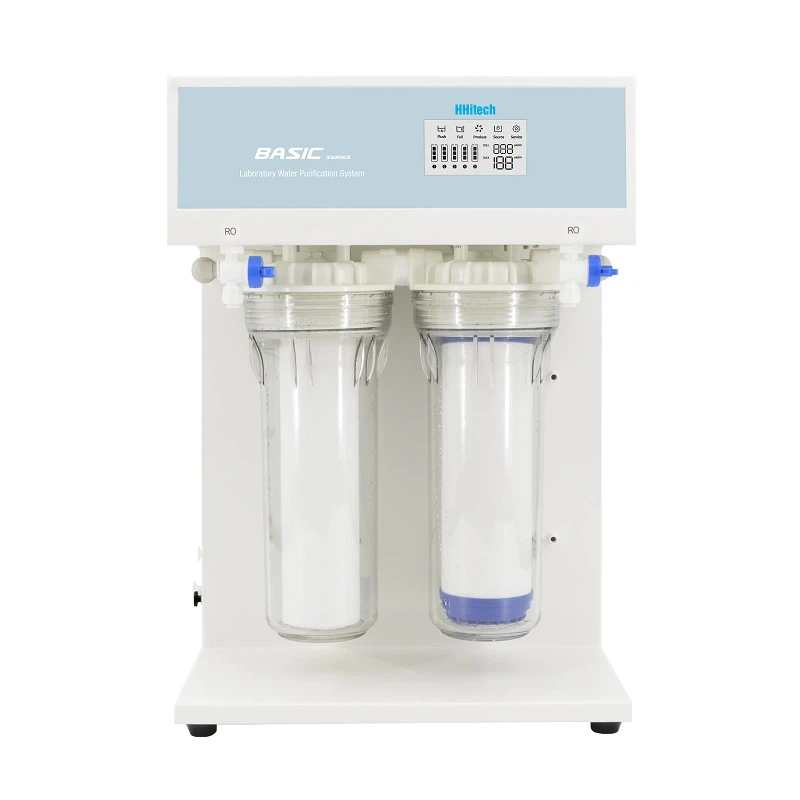
Now, the standard configuration of most lab RO water machines is focused on water purification. Their main job is to take in raw water, whether it's tap water or groundwater, and remove impurities to make it suitable for lab use. The core function is about filtration and purification, not heating water.

However, that doesn't mean a lab RO water machine can't produce hot water. There are actually two ways this can happen.
Some advanced lab RO water machines come with an integrated heating module. These are like all - in - one solutions. The machine first purifies the water through the reverse osmosis process, and then it can heat the purified water to a desired temperature. This is super convenient for labs that need hot, purified water for things like certain chemical reactions or sample preparation. For example, in some microbiology labs, they might need hot water for sterilizing equipment or preparing growth media. If you're interested in such an all - in - one solution, you can check out our Medium - 1600RO Series Reverse Osmosis Water System. It's a great option with some advanced features that might meet your needs.
The other way is to use an external water heater. If your existing lab RO water machine doesn't have a built - in heating function, you can connect it to an external water heater. After the RO machine purifies the water, the purified water can flow into the external heater. This gives you the flexibility to choose a heater that suits your specific temperature requirements and budget. It's a more customizable approach. For instance, if you have a small - scale lab and only need a little bit of hot water at a time, you can pick a compact and energy - efficient heater. And for larger labs with higher hot - water demands, there are industrial - grade external heaters available. Our Medium - RO Series Reverse Osmosis Water System can work well with external heaters, providing you with a flexible setup.
But before you decide whether to go for a machine with a built - in heater or use an external one, there are a few things you should consider.
Cost is a big factor. Machines with integrated heating modules are usually more expensive upfront. They come with the additional technology and components for heating, which adds to the production cost. On the other hand, using an external heater might seem cheaper at first, but you need to factor in the cost of the heater itself, installation, and ongoing energy consumption.
Energy efficiency is also important. Built - in heating modules in lab RO water machines are often designed to be energy - efficient as part of the overall system. They can be optimized to heat only the amount of water needed and at the right time. External heaters vary in their energy efficiency. Some older models or lower - quality ones might consume a lot of energy, which can add up to your operating costs over time.
Maintenance is another aspect. A machine with a built - in heater might require more specialized maintenance. If something goes wrong with the heating module, you might need to call in a technician who is familiar with both the RO system and the heating technology. With an external heater, it's a bit more straightforward. You can usually find local technicians to handle the maintenance or even do some basic checks and repairs yourself.
If you're just starting out in a new lab or looking to upgrade your existing water purification system, you have a wide range of options. Our Basic - RO Series Reverse Osmosis Water System is a great entry - level option. It provides high - quality water purification at an affordable price. If you think you might need hot water in the future, you can start with this system and then add an external heater later.
In conclusion, while a standard lab RO water machine is mainly for water purification, it is possible to get hot water. You can either choose a machine with a built - in heating module or use an external heater. Each option has its pros and cons, and it really depends on your specific lab needs, budget, and long - term plans.
If you're interested in learning more about our lab RO water machines or have questions about getting hot water from them, don't hesitate to reach out. We're here to help you find the best solution for your lab. Whether you need a simple purification system or a more complex setup with hot - water capabilities, we've got you covered.
References
- General knowledge about laboratory water purification systems and heating technologies in the scientific community.
- Product specifications and features of our lab RO water machines.


