

As a supplier of laboratory RO plants, I often encounter inquiries from pharmaceutical laboratories regarding the suitability of our systems for their specific needs. In this blog post, I will explore the question: Can a laboratory RO plant be used in a pharmaceutical laboratory? I'll delve into the requirements of pharmaceutical labs, the capabilities of laboratory RO plants, and provide insights to help you make an informed decision.
Requirements of Pharmaceutical Laboratories
Pharmaceutical laboratories have stringent requirements for water quality due to the critical nature of their work. Water is used in various processes, including drug formulation, cleaning of equipment, and conducting experiments. The quality of water can significantly impact the safety, efficacy, and stability of pharmaceutical products.
The United States Pharmacopeia (USP) and other international standards define the quality requirements for water used in pharmaceutical manufacturing. These standards specify limits for various contaminants, including bacteria, endotoxins, heavy metals, and dissolved solids. For example, water for injection (WFI) must meet the strictest purity standards, with low levels of pyrogens and microbial contamination.
Capabilities of Laboratory RO Plants
Laboratory RO plants are designed to produce high-quality water by removing a wide range of contaminants through the process of reverse osmosis. Reverse osmosis is a membrane filtration technique that uses a semi-permeable membrane to separate water molecules from dissolved salts, organic compounds, and other impurities.
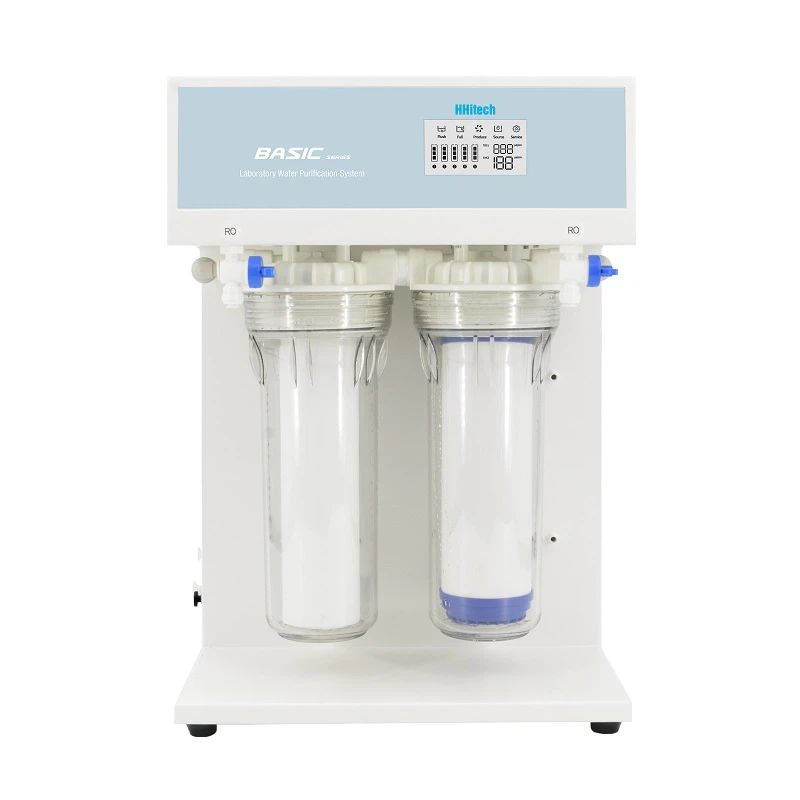
Our Medium-RO Series Reverse Osmosis Water System and Basic-RO Series Reverse Osmosis Water System are specifically engineered to meet the needs of laboratory applications. These systems are equipped with advanced membranes and filtration technologies to achieve high rejection rates of contaminants, ensuring the production of pure and consistent water.
The Medium-RRO Series Reverse Osmosis Water System offers additional features for enhanced water purification, such as a second pass of reverse osmosis and ultraviolet (UV) disinfection. This system is capable of producing water with extremely low levels of contaminants, making it suitable for applications that require high-purity water, such as pharmaceutical research and development.

Suitability for Pharmaceutical Laboratories
In general, laboratory RO plants can be used in pharmaceutical laboratories to produce water that meets many of the quality requirements. However, it's important to note that the specific needs of each pharmaceutical laboratory may vary depending on the type of products being manufactured and the regulatory requirements.
For some applications, such as general laboratory use and cleaning of equipment, the water produced by a standard laboratory RO plant may be sufficient. These systems can effectively remove a majority of contaminants, including dissolved salts, heavy metals, and organic compounds, providing a reliable source of high-quality water.
However, for applications that require water of the highest purity, such as drug formulation and production of parenteral products, additional purification steps may be necessary. This may include the use of distillation, ion exchange, or other advanced purification technologies to further reduce the levels of contaminants and meet the strict requirements of the USP and other regulatory bodies.
Considerations for Pharmaceutical Laboratories
When considering the use of a laboratory RO plant in a pharmaceutical laboratory, there are several factors to take into account:
- Regulatory Compliance: Ensure that the RO plant meets the regulatory requirements of the pharmaceutical industry. This may include compliance with the USP, European Pharmacopoeia (EP), or other relevant standards.
- Water Quality Monitoring: Implement a comprehensive water quality monitoring program to ensure that the water produced by the RO plant meets the required specifications. This may involve regular testing for contaminants, such as bacteria, endotoxins, and heavy metals.
- System Validation: Validate the RO plant to demonstrate its ability to consistently produce water of the desired quality. This may involve conducting performance qualification (PQ) studies and documenting the results to meet regulatory requirements.
- Maintenance and Service: Establish a regular maintenance and service schedule for the RO plant to ensure its proper operation and longevity. This may include更换 filters, membranes, and other components as needed, as well as performing routine inspections and preventive maintenance.
Conclusion
In conclusion, a laboratory RO plant can be a valuable asset for a pharmaceutical laboratory, providing a reliable source of high-quality water for various applications. However, it's important to carefully evaluate the specific needs of the laboratory and ensure that the RO plant meets the regulatory requirements and quality standards.
If you're interested in learning more about our laboratory RO plants and how they can be customized to meet the needs of your pharmaceutical laboratory, please don't hesitate to contact us. Our team of experts is available to provide you with detailed information and assistance in selecting the right system for your application. We look forward to working with you to ensure the success of your pharmaceutical research and production.
References
- United States Pharmacopeia (USP)
- European Pharmacopoeia (EP)
- Reverse Osmosis Technology: Principles and Applications, by M. A. Desalination and Water Treatment


