

Can a laboratory RO plant remove all impurities from water?
Hey there! I'm a supplier of laboratory RO plants, and I've been getting this question a lot lately: Can a laboratory RO plant remove all impurities from water? Well, let's dive right in and break it down.
First off, for those who might not be familiar, RO stands for Reverse Osmosis. It's a super nifty water purification technology used in tons of labs around the world. The basic idea behind RO is pretty simple. You've got a semi - permeable membrane, and water is forced through it under pressure. Impurities that are larger in size than the tiny pores of the membrane can't pass through and get left behind.

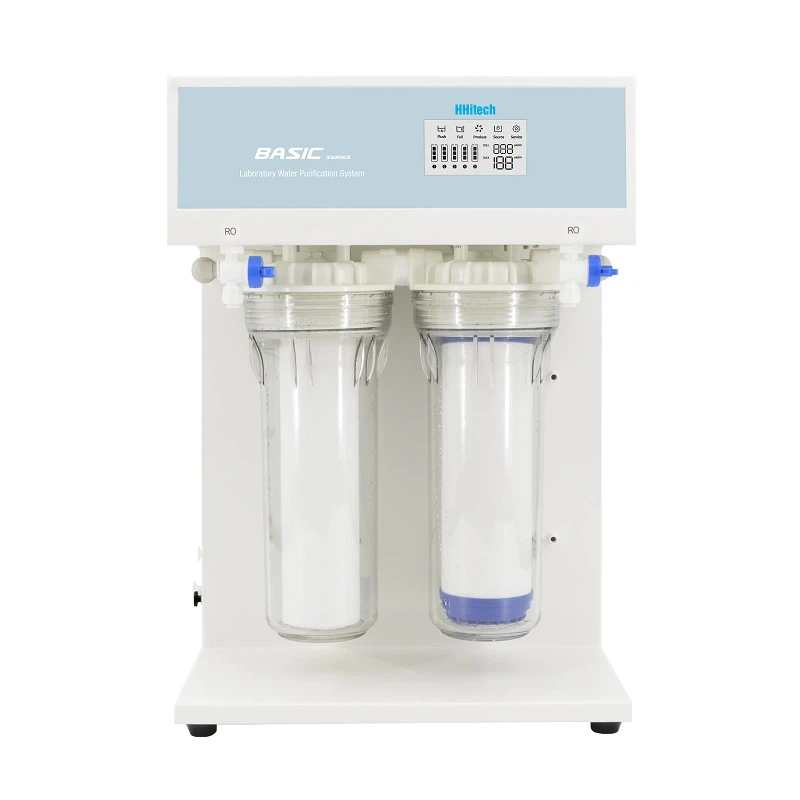
Our company offers a few different RO plant series, like the Smart - RO Series Reverse Osmosis Water System, the Medium - 1600RO Series Reverse Osmosis Water System, and the Basic - RO Series Reverse Osmosis Water System. Each series is designed for different needs, whether you've got a small - scale lab or a big research facility.
Now, back to the question: Can it remove all impurities? Well, RO plants are pretty amazing, but they're not magic. They're really good at eliminating a whole bunch of common impurities. For instance, they can get rid of dissolved salts, which is a big deal in water purification. When you've got high levels of salts in water, it can cause all sorts of problems in lab experiments. RO plants do a solid job of reducing the concentration of these salts to very low levels.
They're also great at removing heavy metals like lead, mercury, and cadmium. These metals can be super toxic, and even tiny amounts can mess up the results in a lab. Our RO systems are designed to filter out these heavy metals effectively, providing cleaner and safer water for your experiments.
Microorganisms are another concern in lab water. Bacteria, viruses, and other pathogens can contaminate samples and ruin the accuracy of research. RO plants act as a barrier to many of these microorganisms. The semi - permeable membrane stops most of them from passing through with the water. However, it's important to note that some really tiny viruses might be small enough to slip through the membrane pores. That's why we recommend additional treatment steps, like UV sterilization, especially when dealing with extremely sensitive experiments.
But here's the thing. There are some impurities that RO plants have a hard time getting rid of. One example is dissolved gases. Gases like carbon dioxide, oxygen, and nitrogen can be present in water. Since these gases are small molecules, they can easily pass through the RO membrane. If you're running an experiment that's sensitive to gas levels in water, an RO plant alone won't cut it. You might need to use a degassing unit in addition to the RO system.
And then there are organic compounds. Some organic substances, especially very small and non - polar ones, can also make it through the RO membrane. Compounds like certain pesticides and some types of pharmaceuticals can be a challenge for RO plants. In cases where you need to remove these types of impurities, you may have to combine the RO process with other purification methods, like activated carbon filtration.
The efficiency of an RO plant in removing impurities also depends on a few factors. The quality of the membrane is a big one. A high - quality membrane will generally do a better job of filtering out impurities. Maintenance is another crucial aspect. If the RO system isn't properly maintained, the membrane can get clogged with impurities over time. This not only reduces its efficiency but can also lead to the passage of more impurities through the membrane. So, regular cleaning and replacement of parts are essential to keep the RO plant working at its best.
The feed water quality also matters a lot. If the water going into the RO plant is really dirty, with a high concentration of suspended solids, it can put a lot of strain on the system. Pre - treatment of the feed water, like sediment filtration and water softening, can help extend the life of the RO membrane and improve the overall performance of the system.
So, to sum it all up, a laboratory RO plant can remove a large number of impurities from water, but it can't remove all of them. It's a powerful and essential tool for water purification in labs, but in many cases, it needs to be part of a more comprehensive purification process. By combining RO technology with other treatment methods, you can achieve a much higher level of water purity.
If you're in the market for a laboratory RO plant or want to learn more about how to design a complete water purification system for your lab, we'd love to talk to you. Our team of experts can help you choose the right system for your specific needs, whether it's the Smart - RO series for a more advanced setup, the Medium - 1600RO series for medium - sized labs, or the Basic - RO series for more budget - friendly options. Get in touch with us to start the procurement process and let's work together to get you the cleanest water for your lab experiments.
References:
- "Water Purification Technology Handbook"
- Research papers on Reverse Osmosis water treatment in laboratory settings


