

Hey there! I'm a supplier of lab RO water machines, and today I wanna chat about how these nifty devices handle bacteria and viruses. It's a super important topic, especially when you're dealing with lab work where water purity is key.
First off, let's understand what an RO water machine does. RO stands for Reverse Osmosis. In simple terms, it's a process that forces water through a semi - permeable membrane to remove impurities. This membrane has tiny pores that are so small that most contaminants, including bacteria and viruses, can't pass through.
How the Membrane Works Against Bacteria and Viruses
The semi - permeable membrane in our lab RO water machines is like a super - fine net. Bacteria are relatively large compared to the pores of the membrane. For example, common bacteria like E. coli have a size ranging from 1 to 2 micrometers. Our RO membranes have pores that are much smaller, usually in the range of 0.0001 to 0.001 micrometers. So, bacteria simply can't squeeze through these pores.
Viruses are even smaller than bacteria, but they're still blocked by the RO membrane. Most viruses have a size between 0.02 and 0.3 micrometers. Even though they're tinier, the membrane's structure is designed in such a way that it can effectively keep them out. This is a fundamental way our lab RO water machines start to purify water from these harmful microorganisms.
Pre - Treatment Stages
Before the water even reaches the RO membrane, it goes through pre - treatment stages. These stages are crucial as they help protect the RO membrane and also start the process of removing bacteria and viruses.
One of the common pre - treatment steps is sediment filtration. This filter removes large particles like sand, dirt, and rust. While these aren't bacteria or viruses, getting rid of them helps prevent clogging of the RO membrane. If the membrane gets clogged, its efficiency in removing bacteria and viruses can be reduced.
Another pre - treatment method is activated carbon filtration. Activated carbon has a large surface area with lots of tiny pores. It can adsorb organic compounds, chlorine, and some bacteria. Chlorine is often added to municipal water supplies to kill bacteria. However, chlorine can damage the RO membrane. So, the activated carbon filter not only helps in removing some bacteria but also protects the RO membrane from chlorine damage.
Post - Treatment for Extra Assurance
After the water passes through the RO membrane, we often include post - treatment steps to ensure that the water is completely free of bacteria and viruses.
One such step is UV sterilization. Ultraviolet light has the ability to damage the DNA of bacteria and viruses. When the water flows through a UV sterilization chamber, the UV light penetrates the cells of these microorganisms and disrupts their genetic material. This prevents them from reproducing, effectively rendering them harmless.
Another option is ultrafiltration. Ultrafiltration membranes have pores that are slightly larger than RO membranes but still small enough to trap any remaining bacteria or viruses that might have somehow made it through the RO process. It acts as an extra safety net to ensure the water's purity.
Our Product Lines and Their Features
We offer different series of lab RO water machines, each with its own set of features to handle bacteria and viruses effectively.
The Medium - RRO Series Reverse Osmosis Water System is a great choice for medium - sized labs. It has a high - quality RO membrane that provides excellent rejection of bacteria and viruses. The pre - treatment stages are well - designed to protect the membrane and start the purification process. It also comes with an optional UV sterilization unit for that extra peace of mind.
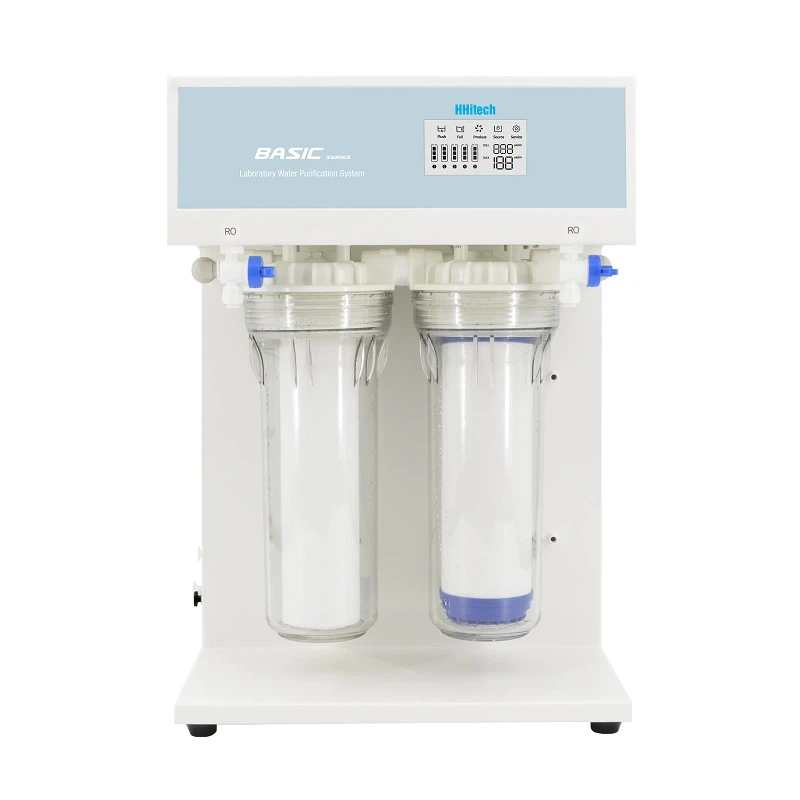
The Basic - RO Series Reverse Osmosis Water System is a more budget - friendly option. While it has a slightly simpler design, it still uses a reliable RO membrane to remove bacteria and viruses. The pre - treatment filters are efficient enough to ensure that the membrane lasts longer and works effectively.
The Smart - RO Series Reverse Osmosis Water System is our top - of - the - line product. It's equipped with advanced sensors and controls. The RO membrane in this series is of the highest quality, providing near - perfect rejection of bacteria and viruses. It also has multiple post - treatment options, including UV sterilization and ultrafiltration, to ensure the purest water possible.
Monitoring and Maintenance
To make sure our lab RO water machines are always working at their best in handling bacteria and viruses, regular monitoring and maintenance are essential.
We recommend regular testing of the water output for the presence of bacteria and viruses. This can be done using simple test kits available in the market. If any contamination is detected, it could be a sign that the RO membrane needs to be replaced or that there's an issue with the pre - or post - treatment stages.
Maintenance also includes replacing the pre - treatment filters at regular intervals. As these filters get clogged with particles, their efficiency decreases, which can affect the overall performance of the machine in removing bacteria and viruses. The RO membrane also has a limited lifespan and should be replaced according to the manufacturer's guidelines.

Why Choose Our Lab RO Water Machines
When it comes to handling bacteria and viruses in your lab water, our machines offer several advantages. Firstly, our membranes are made from high - quality materials that are designed to provide maximum rejection of these microorganisms. Secondly, our pre - and post - treatment stages are carefully engineered to work together to ensure the purest water possible.
We also understand that every lab has different needs. That's why we offer a range of products, from the basic to the advanced, so you can choose the one that best suits your requirements and budget. And our customer support team is always ready to help you with any questions or issues you might have regarding the operation and maintenance of our machines.
Let's Talk
If you're in the market for a lab RO water machine that can effectively handle bacteria and viruses, I'd love to have a chat with you. Whether you're setting up a new lab or looking to upgrade your existing water purification system, we can find the perfect solution for you. Get in touch with us to start the conversation about your specific needs and how our products can meet them.
References
- "Water Treatment Handbook" by Paul M. Huck
- "Reverse Osmosis Technology: Principles and Applications" by David R. Lide


