

Hey there! As a supplier of lab RO water systems, I often get asked this question: How often should the filters in a lab RO water system be replaced? Well, there's no one - size - fits - all answer, but I'm gonna break it down for you.
First off, let's understand why filter replacement is so crucial. In a lab, the quality of water can make or break an experiment. RO (Reverse Osmosis) water systems are designed to remove impurities from water, and the filters play a key role in this process. Over time, these filters get clogged with contaminants, which can reduce the system's efficiency and the quality of the water it produces.
Factors Affecting Filter Replacement Frequency
1. Water Source Quality
The quality of your water source is a major factor. If you're using water from a well or a source with high levels of sediment, minerals, or organic matter, your filters will get dirty a lot faster. For instance, if the water has a high turbidity (lots of suspended particles), the pre - filters will have to work extra hard to trap those particles. In such cases, you might need to replace the pre - filters every 1 - 3 months. On the other hand, if you're using municipal water that's already treated, the filter lifespan can be longer, maybe 3 - 6 months.
2. System Usage
How often you use your lab RO water system also matters. A system that runs 24/7 in a busy research lab will put more strain on the filters compared to one that's used only occasionally. If your lab has a high demand for pure water, say for continuous experiments or large - scale sample preparations, the filters will accumulate contaminants more quickly. In a high - usage scenario, you may need to replace the filters every 2 - 4 months. For a low - usage lab, where the system is used just a few hours a week, the filters could last 6 - 12 months.
3. Type of Filters
There are different types of filters in a lab RO water system, and each has its own replacement schedule.
- Pre - filters: These are the first line of defense. They remove large particles like sediment, sand, and rust. Sediment pre - filters usually need to be replaced every 1 - 6 months, depending on the water quality and usage. Carbon pre - filters, which remove chlorine and organic compounds, typically last 3 - 6 months.
- RO Membrane: This is the heart of the RO system. It removes dissolved salts, heavy metals, and other contaminants at a molecular level. The RO membrane can last 2 - 3 years, but its lifespan can be shortened if the pre - filters aren't replaced regularly or if the water quality is extremely poor.
- Post - filters: These filters polish the water after it passes through the RO membrane. They can remove any remaining traces of contaminants and improve the taste and odor of the water. Post - filters usually need to be replaced every 6 - 12 months.
Our Lab RO Water Systems and Filter Replacement
We offer a range of lab RO water systems, including the Basic - RO Series Reverse Osmosis Water System, the Medium - 1600RO Series Reverse Osmosis Water System, and the Medium - RO Series Reverse Osmosis Water System. Each system is designed to meet different lab needs, and the filter replacement schedules can vary slightly.
For the Basic - RO Series, which is great for small labs with relatively low water demand, the pre - filters might last a bit longer if the water source is good. But if you're using it in a more challenging environment, you'll still need to keep an eye on them. The RO membrane in this series can provide high - quality water for 2 - 3 years with proper maintenance.

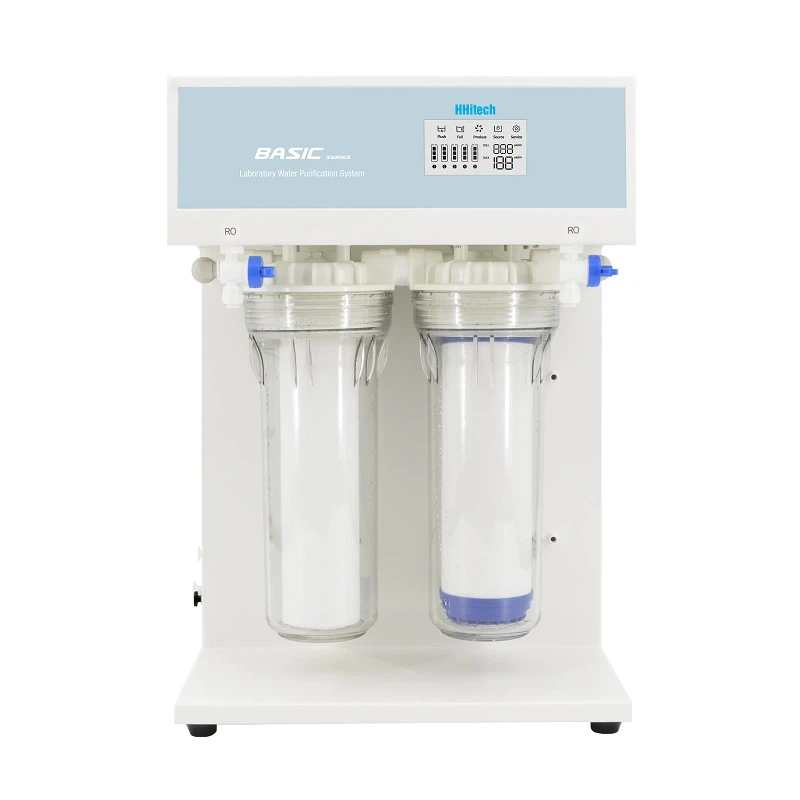
The Medium - 1600RO Series and the Medium - RO Series are designed for medium - sized labs with higher water usage. These systems are more robust, but the filters will still need regular replacement. Due to the increased demand, you might need to replace the pre - filters every 2 - 4 months and keep a close eye on the RO membrane's performance.
Signs That Filters Need Replacement
It's not always easy to tell when a filter needs replacing just by looking at it. Here are some signs to watch out for:
- Reduced Water Flow: If you notice that the water flow from your RO system has slowed down, it could be a sign that the filters are clogged. A clogged pre - filter or RO membrane can restrict the flow of water through the system.
- Poor Water Quality: If the water from your RO system starts to taste or smell bad, or if it contains visible particles, it's likely that the filters are no longer doing their job effectively.
- Increased Pressure: An increase in the pressure within the system can indicate a clogged filter. Most RO systems have pressure gauges that can help you monitor this.
Tips for Extending Filter Lifespan
Here are some things you can do to make your filters last longer:
- Regular Maintenance: Keep your RO system clean and well - maintained. Follow the manufacturer's instructions for cleaning and sanitizing the system.
- Use a Water Softener: If your water has a high hardness level, using a water softener before the RO system can reduce the load on the filters, especially the RO membrane.
- Monitor Water Quality: Regularly test the quality of your water source and the water produced by the RO system. This can help you detect any issues early and take appropriate action.
Conclusion
So, as you can see, the frequency of filter replacement in a lab RO water system depends on several factors. There's no fixed rule, but by considering the water source quality, system usage, and type of filters, you can come up with a replacement schedule that works for your lab.
If you're in the market for a new lab RO water system or need help with filter replacement for your existing system, don't hesitate to reach out. We're here to provide you with the best solutions and support for your lab's water purification needs. Whether you're running a small research lab or a large - scale testing facility, we've got the right system for you.
References
- "Principles of Reverse Osmosis" - Water Treatment Handbook
- "RO System Maintenance Guide" - Manufacturer's Manuals


