

As a supplier of lab RO water systems, I've had the privilege of working closely with various laboratories, understanding their needs, and witnessing firsthand the capabilities and limitations of these systems. Reverse Osmosis (RO) technology is a cornerstone in water purification for laboratories, providing high - quality water for a wide range of applications. However, like any technology, lab RO water systems are not without their limitations.
1. Initial Investment and Operating Costs
One of the most significant limitations of a lab RO water system is the initial investment required. These systems are complex pieces of equipment that involve advanced membranes, pumps, and control systems. The cost of purchasing a lab RO water system can be quite substantial, especially for high - capacity or high - purity models. For example, our Medium - 1600RO Series Reverse Osmosis Water System is designed to meet the demanding needs of large - scale laboratories, but its advanced features come with a relatively high price tag.
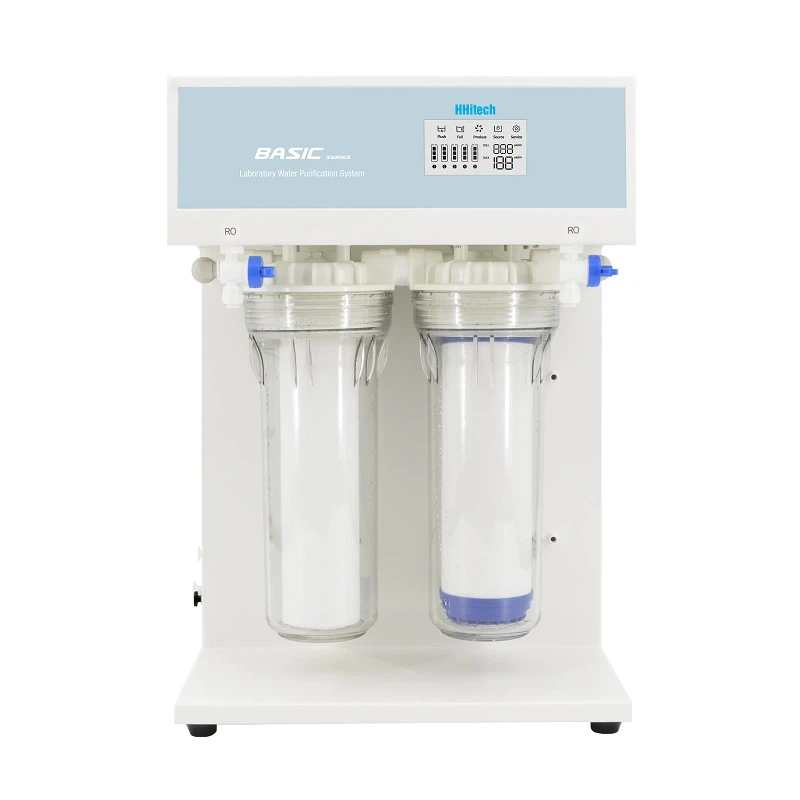

In addition to the purchase cost, the operating costs of a lab RO water system can also be a burden. The RO membranes need to be replaced periodically, usually every 1 - 3 years depending on the quality of the feed water and the usage of the system. The replacement membranes can be expensive, and the labor cost for installation also adds to the overall expense. Moreover, the system consumes electricity to run the pumps, and in some cases, additional chemicals may be required for pre - treatment and post - treatment of the water.
2. Water Waste
RO systems work by forcing water through a semi - permeable membrane, which allows water molecules to pass through while rejecting most contaminants. However, this process is not 100% efficient, and a significant amount of water is wasted in the process. Typically, for every gallon of purified water produced, 2 - 3 gallons of water are discharged as waste. This water waste can be a major concern, especially in regions where water is scarce or where there are strict regulations on water usage.
For smaller laboratories, the water waste may not seem like a huge issue. But for large - scale operations, the cumulative amount of wasted water can be substantial. Our Medium - RRO Series Reverse Osmosis Water System is designed to be more efficient than some other models, but it still generates a certain amount of waste water.
3. Limited Removal of Certain Contaminants
While RO systems are very effective at removing a wide range of contaminants such as salts, heavy metals, and most organic compounds, there are some contaminants that they may not be able to remove completely. For example, some low - molecular - weight organic compounds, such as certain pesticides and volatile organic compounds (VOCs), may be able to pass through the RO membrane. In addition, some gases, such as carbon dioxide, can also penetrate the membrane and affect the quality of the purified water.
To address these limitations, additional purification steps are often required. For instance, activated carbon filters can be used to remove VOCs, and degassing units can be installed to remove dissolved gases. However, these additional steps add to the complexity and cost of the water purification system. Our Basic - RO Series Reverse Osmosis Water System provides a basic level of water purification, but for laboratories with more stringent requirements, additional purification modules may be necessary.
4. Sensitivity to Feed Water Quality
The performance of a lab RO water system is highly dependent on the quality of the feed water. If the feed water contains high levels of suspended solids, colloids, or microorganisms, it can quickly foul the RO membrane, reducing its efficiency and lifespan. High levels of hardness in the feed water can also cause scaling on the membrane, which can further impair the performance of the system.
To protect the RO membrane, pre - treatment of the feed water is essential. This may include processes such as sediment filtration, activated carbon filtration, and water softening. However, pre - treatment systems also require regular maintenance and replacement of filter cartridges, which adds to the overall cost and complexity of the water purification process. In some cases, if the feed water quality is extremely poor, the RO system may not be able to operate effectively at all.
5. Maintenance Requirements
Lab RO water systems require regular maintenance to ensure their proper functioning and to extend their lifespan. This includes routine checks of the system's components, such as the pumps, valves, and sensors, as well as the replacement of filters and membranes. The maintenance tasks can be time - consuming and require specialized knowledge and skills.
For example, the RO membrane needs to be cleaned periodically to remove any fouling or scaling. This cleaning process involves using specific cleaning agents and following a strict procedure to avoid damaging the membrane. If the maintenance is not carried out properly, it can lead to a decrease in the system's performance, an increase in operating costs, and even system failure.
6. Limited Capacity
The capacity of a lab RO water system is determined by its design and the size of its components. For small laboratories with relatively low water demand, a basic RO system may be sufficient. However, for larger laboratories or those with high - volume water requirements, the capacity of a standard RO system may be limited.
When the demand for purified water exceeds the system's capacity, the quality of the water may be affected. The system may not be able to maintain the required pressure and flow rate, which can lead to incomplete separation of contaminants and a decrease in the purity of the output water. In such cases, multiple RO systems may need to be installed in parallel, which increases the initial investment and the complexity of the system.
Conclusion
Despite these limitations, lab RO water systems remain an essential tool for water purification in laboratories. They offer a reliable and effective way to produce high - quality water for a variety of applications. At our company, we are constantly working to improve the performance of our RO water systems, reduce their limitations, and provide our customers with the best possible solutions.
If you are facing challenges with your current water purification system or are considering purchasing a new lab RO water system, we invite you to contact us for a detailed consultation. Our team of experts can help you assess your needs, recommend the most suitable system, and provide you with comprehensive support throughout the purchasing and installation process. Let's work together to find the best water purification solution for your laboratory.
References
- "Reverse Osmosis Water Treatment: Principles and Applications" by X. Meng et al.
- "Water Purification Technologies for Laboratory Use" published by a leading scientific research institute.
- Technical manuals of our Medium - 1600RO Series, Medium - RRO Series, and Basic - RO Series Reverse Osmosis Water Systems.


