

Hey there! As a supplier of Type III water systems, I often get asked about the water treatment capacity of these systems. So, I thought I'd break it down for you in this blog post.
Understanding Type III Water Systems
First off, let's quickly go over what a Type III water system is. Type III water, also known as RO (Reverse Osmosis) water, is produced by passing feed water through a semi - permeable membrane in a reverse osmosis process. It's commonly used in a variety of applications like general laboratory use, glassware rinsing, and some industrial processes.

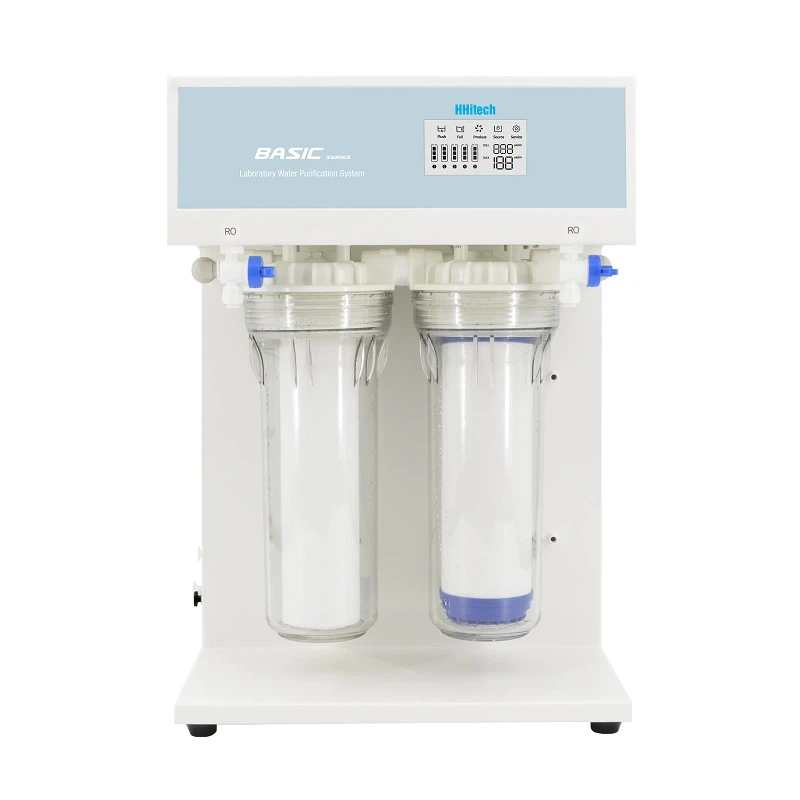
Now, the water treatment capacity of a Type III water system can vary widely depending on several factors.
Factors Affecting Water Treatment Capacity
Feed Water Quality
The quality of the water that goes into the system plays a huge role. If your feed water is heavily contaminated with things like sediment, dissolved solids, or organic matter, the system will have to work harder to purify it. For instance, if you're using water from a well that has high levels of iron or sulfur, the system's capacity to produce Type III water might be reduced because it has to first remove these contaminants.
System Design and Model
There are different models of Type III water systems, each with its own set of features and capabilities. We offer several great options, like the Basic - RO Series Reverse Osmosis Water System. This basic model is designed for smaller - scale operations and has a relatively lower water treatment capacity. It's perfect for small laboratories or businesses with limited water needs.
On the other hand, our Medium - RRO Series Reverse Osmosis Water System and Medium - RO Series Reverse Osmosis Water System are more powerful. These medium - sized models are built to handle higher volumes of water and can produce Type III water at a faster rate. They're great for medium - sized laboratories or industrial facilities that require a steady supply of purified water.
Flow Rate
The flow rate of the system is another key factor. Flow rate refers to how much water the system can process in a given amount of time, usually measured in liters per hour (L/h) or gallons per minute (GPM). A system with a higher flow rate can treat more water in less time. For example, if you have a system with a flow rate of 100 L/h, it can produce 100 liters of Type III water in one hour. But if you need more water, say 200 liters per hour, you'll need a system with a higher flow rate.
Measuring Water Treatment Capacity
Total Dissolved Solids (TDS) Reduction
One way to measure a Type III water system's capacity is by looking at its ability to reduce Total Dissolved Solids (TDS). TDS is a measure of all the inorganic and organic substances dissolved in water. A good Type III water system should be able to significantly reduce the TDS of the feed water. For example, if your feed water has a TDS of 500 ppm (parts per million) and the system can reduce it to 10 ppm or less, that's a great sign of its purification capacity.
Rejection Rate
The rejection rate is also an important metric. It tells you how well the reverse osmosis membrane in the system can reject contaminants. A high rejection rate means that more contaminants are being kept out of the purified water. Most of our Type III water systems have a rejection rate of over 95%, which means that more than 95% of the contaminants in the feed water are removed during the purification process.
Typical Water Treatment Capacities
Small - Scale Systems
For small - scale Type III water systems, like the ones in our Basic - RO series, the water treatment capacity can range from about 10 to 50 liters per hour. These systems are great for home laboratories, small clinics, or educational institutions where the demand for purified water is relatively low.
Medium - Scale Systems
Our medium - scale systems, such as the Medium - RRO and Medium - RO series, can handle anywhere from 50 to 200 liters per hour. They're suitable for medium - sized laboratories, food and beverage processing plants, or industrial workshops that need a more consistent supply of Type III water.
Large - Scale Systems
For large - scale operations, there are also more powerful Type III water systems available. These can have a water treatment capacity of over 200 liters per hour and are used in large industrial facilities, hospitals, or research centers where the demand for purified water is very high.
Why Choose Our Type III Water Systems
Our Type III water systems are designed with the latest technology to ensure high - quality water purification. We use advanced reverse osmosis membranes that have a long lifespan and can effectively remove a wide range of contaminants. Plus, our systems are easy to install and maintain, which means you won't have to spend a lot of time or money on upkeep.
Whether you're a small business just starting out or a large industrial facility looking for a reliable water purification solution, we have a Type III water system that can meet your needs.
Wrapping It Up and Reaching Out
So, there you have it! That's a breakdown of the water treatment capacity of Type III water systems. If you're interested in learning more about our products or need help choosing the right system for your specific requirements, don't hesitate to get in touch. We're here to assist you with all your water purification needs and can provide you with detailed information on our different models and their capacities. Let's start a conversation about how we can help you get the pure water you need.
References
- "Water Treatment Basics" - Water Quality Association
- "Reverse Osmosis Technology" - American Water Works Association


