

As a supplier of laboratory RO (Reverse Osmosis) plants, I've witnessed firsthand the significant impact that bacteria can have on these systems. In this blog post, I'll delve into the various ways bacteria can affect a laboratory RO plant, explore the potential consequences, and discuss strategies to mitigate these issues.
How Bacteria Enter a Laboratory RO Plant
Bacteria can find their way into a laboratory RO plant through multiple routes. One common source is the feed water. If the source water contains a high concentration of bacteria, such as in surface water or poorly treated municipal water, these microorganisms can enter the RO system. Additionally, improper handling during installation, maintenance, or operation can introduce bacteria. For example, if technicians do not follow strict aseptic techniques when working on the system, they may introduce bacteria from their hands or tools.

Another potential entry point is through the air. Bacteria can be present in the laboratory environment, especially in areas with high traffic or poor ventilation. These airborne bacteria can settle on the RO plant components and eventually make their way into the water stream.
Impact on Membrane Performance
One of the most significant impacts of bacteria on a laboratory RO plant is on the performance of the RO membranes. Bacteria can form biofilms on the membrane surface. A biofilm is a complex community of microorganisms that adhere to a surface and produce a protective extracellular polymeric substance (EPS). This biofilm acts as a physical barrier, reducing the effective surface area of the membrane available for water permeation.
As a result, the water flux through the membrane decreases. This means that the RO plant will produce less purified water over a given period. Moreover, the biofilm can also increase the resistance to mass transfer, leading to a decrease in the rejection rate of contaminants. This means that more impurities, including bacteria themselves, may pass through the membrane and end up in the product water.
The presence of biofilms can also cause fouling of the membrane. Fouling can lead to an increase in the differential pressure across the membrane. Higher differential pressure requires more energy to pump the water through the membrane, increasing the operating costs of the RO plant. In severe cases, fouling can cause irreversible damage to the membrane, necessitating its replacement.
Impact on Water Quality
Bacteria in a laboratory RO plant can have a direct impact on the quality of the product water. Even if the RO membranes are functioning properly, some bacteria may still be able to pass through the membrane, especially if the membrane has been damaged or fouled. The presence of bacteria in the product water can be a significant concern for laboratory applications.
In many laboratory settings, the water is used for critical processes such as cell culture, chromatography, or chemical analysis. Bacteria in the water can contaminate these processes, leading to inaccurate results. For example, in cell culture, bacteria can compete with the cells for nutrients, secrete toxins, and alter the pH of the culture medium, ultimately affecting the growth and viability of the cells.
In addition to the direct presence of bacteria, their metabolic by - products can also affect water quality. Bacteria can produce organic acids, enzymes, and other compounds that can change the chemical composition of the water. These by - products can interfere with chemical reactions in the laboratory and may also cause corrosion of the RO plant components and other laboratory equipment.
Impact on System Reliability and Maintenance
Bacteria can also impact the reliability and maintenance requirements of a laboratory RO plant. As mentioned earlier, biofilm formation and fouling can lead to a decrease in membrane performance. This often requires more frequent cleaning and maintenance of the RO system.
Regular cleaning of the RO membranes is necessary to remove the biofilm and restore membrane performance. However, frequent cleaning can be time - consuming and may also cause damage to the membrane if not done properly. Moreover, the chemicals used for cleaning can be expensive and may have environmental implications.
In some cases, bacteria can also cause damage to other components of the RO plant, such as pumps, valves, and pipes. The corrosion caused by bacterial by - products can weaken these components, leading to leaks and malfunctions. This can result in system downtime, which can be costly for laboratories that rely on a continuous supply of purified water.
Strategies to Mitigate the Impact of Bacteria
To minimize the impact of bacteria on a laboratory RO plant, several strategies can be employed.
Pre - treatment: Effective pre - treatment of the feed water is crucial. This can include filtration to remove large particles and microorganisms, as well as disinfection to kill bacteria. Common pre - treatment methods include activated carbon filtration, which can remove organic matter that can serve as a food source for bacteria, and ultraviolet (UV) disinfection, which can inactivate bacteria by damaging their DNA.
Membrane Selection: Choosing the right RO membranes can also help reduce the impact of bacteria. Some membranes are designed to be more resistant to biofouling. These membranes may have a smoother surface or be made of materials that are less prone to biofilm formation.
Regular Monitoring: Regular monitoring of the RO plant is essential to detect the presence of bacteria early. This can include monitoring the water quality parameters such as total organic carbon (TOC), conductivity, and microbial count. By detecting bacteria early, appropriate measures can be taken to prevent biofilm formation and membrane fouling.
Proper Maintenance and Cleaning: Following a strict maintenance and cleaning schedule is important. This includes regular replacement of pre - filters, proper cleaning of the RO membranes using appropriate cleaning agents, and ensuring that all components of the RO plant are kept clean and dry.
Our Laboratory RO Plant Solutions
At our company, we offer a range of laboratory RO plants designed to minimize the impact of bacteria. Our Medium - RO Series Reverse Osmosis Water System is equipped with advanced pre - treatment and membrane technologies to provide high - quality purified water with low bacterial contamination. The system is easy to maintain and can be customized to meet the specific needs of different laboratories.
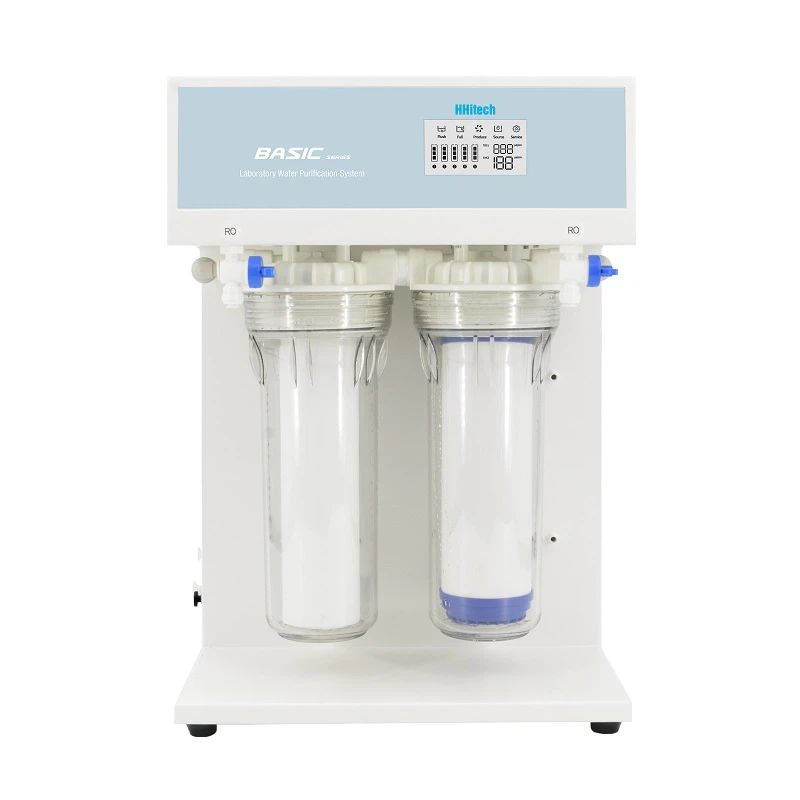
Our Basic - RO Series Reverse Osmosis Water System is a cost - effective solution for smaller laboratories. It provides reliable performance and includes features such as UV disinfection to reduce the bacterial load in the product water.
For larger laboratories with high water demand, our Medium - 1600RO Series Reverse Osmosis Water System offers a high - capacity solution. It is designed with enhanced anti - fouling capabilities to ensure long - term stable operation in the presence of bacteria.
Conclusion
Bacteria can have a significant impact on a laboratory RO plant, affecting membrane performance, water quality, system reliability, and maintenance requirements. However, by implementing appropriate pre - treatment, membrane selection, monitoring, and maintenance strategies, the impact of bacteria can be minimized.
If you are interested in learning more about our laboratory RO plant solutions or have any questions regarding the impact of bacteria on RO systems, please feel free to contact us. We are here to help you find the best solution for your laboratory's water purification needs.
References
- Crittenden, J. C., Trussell, R. R., Hand, D. W., Howe, K. J., & Tchobanoglous, G. (2012). MWH's Water Treatment: Principles and Design. John Wiley & Sons.
- Rosenberg, E., de la Cruz, A., & Thompson, F. L. (Eds.). (2019). The Biofilm Lifestyle. Springer.
- Shon, H. K., Vigneswaran, S., & Ngo, H. H. (2010). Biofouling Control in Reverse Osmosis Membrane Systems. IWA Publishing.


