

In the realm of laboratory research and scientific experimentation, the quality of water used can significantly impact the accuracy and reliability of results. A laboratory reverse osmosis (RO) water system is a cornerstone in ensuring that the water meets the high - purity standards required. One of the key performance indicators of such a system is its recovery rate. In this blog, as a supplier of lab RO water systems, I will delve into what the recovery rate of a lab RO water system is, its significance, and how it affects your laboratory operations.

Understanding the Recovery Rate
The recovery rate of a lab RO water system is defined as the percentage of the feed water that is converted into purified product water. Mathematically, it is calculated using the following formula:
Recovery Rate (%) = (Product Water Flow Rate / Feed Water Flow Rate) × 100
For example, if your lab RO water system has a feed water flow rate of 10 liters per hour and produces 7 liters per hour of purified product water, the recovery rate would be (7 / 10) × 100 = 70%.
The remaining portion of the feed water, which is not converted into product water, is known as the reject or concentrate water. This water contains the impurities and contaminants that have been removed from the feed water during the reverse osmosis process.
Factors Affecting the Recovery Rate
Feed Water Quality
The quality of the feed water is one of the most significant factors influencing the recovery rate. If the feed water has a high concentration of dissolved solids, such as salts, minerals, or organic compounds, the RO membrane will have to work harder to remove these impurities. As a result, the system may need to produce a larger volume of reject water to prevent scaling and fouling on the membrane. For instance, if the feed water has a high hardness level (due to calcium and magnesium salts), the recovery rate may need to be reduced to avoid the precipitation of these salts on the membrane surface.
Membrane Type and Condition
Different types of RO membranes have different rejection characteristics and performance capabilities. Some membranes are designed to achieve higher recovery rates, while others are optimized for higher rejection of specific contaminants. Additionally, the condition of the membrane plays a crucial role. Over time, the membrane can become fouled or damaged due to the accumulation of contaminants, which can reduce its efficiency and lower the recovery rate. Regular maintenance and membrane replacement are essential to ensure optimal performance.
System Design and Operating Pressure
The design of the RO system, including the number and configuration of membranes, can also affect the recovery rate. A well - designed system will be able to distribute the feed water evenly across the membranes, maximizing the recovery rate. Operating pressure is another important factor. Higher operating pressures can generally increase the recovery rate, as they force more water through the membrane. However, there is a limit to the operating pressure, as excessive pressure can damage the membrane.
Significance of the Recovery Rate in a Laboratory Setting
Cost - Efficiency
The recovery rate directly impacts the cost - efficiency of the RO water system. A higher recovery rate means that less feed water is wasted as reject water, which can lead to significant savings in water consumption and associated costs. In a laboratory where large volumes of purified water are required on a daily basis, these savings can add up over time.
Environmental Impact
In today's environmentally conscious world, reducing water waste is a top priority. A lab RO water system with a high recovery rate can contribute to a more sustainable laboratory operation by minimizing the amount of water that is discharged as reject water. This not only helps to conserve water resources but also reduces the environmental impact associated with water treatment and disposal.
System Performance and Longevity
Maintaining an appropriate recovery rate is essential for the long - term performance and longevity of the RO system. If the recovery rate is too high, the membrane may become overloaded with contaminants, leading to fouling, scaling, and premature membrane failure. On the other hand, if the recovery rate is too low, the system may be operating inefficiently, resulting in higher energy consumption and increased operating costs.
Our Lab RO Water Systems and Their Recovery Rates
At our company, we offer a range of lab RO water systems, each designed to meet the specific needs of different laboratories. Our Medium - RO Series Reverse Osmosis Water System is a popular choice for medium - sized laboratories. This system is capable of achieving a recovery rate of up to 75%, depending on the feed water quality and operating conditions. It is equipped with high - quality RO membranes and advanced control systems to ensure optimal performance and efficiency.
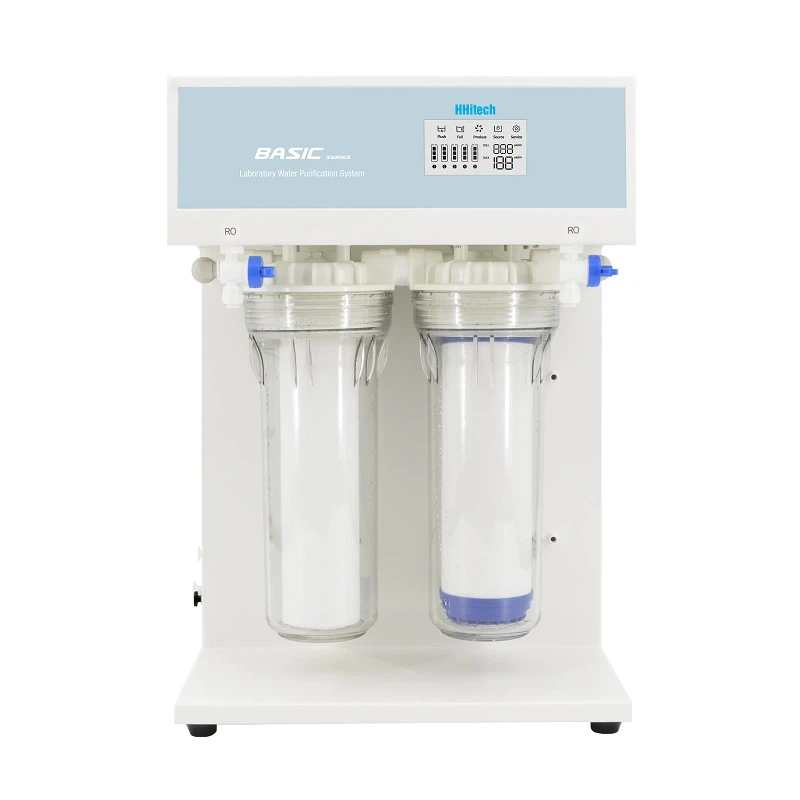
For smaller laboratories with lower water requirements, our Basic - RO Series Reverse Osmosis Water System provides a cost - effective solution. This system has a recovery rate of around 60 - 65% and is designed for easy installation and operation.
If your laboratory has high - volume water demands, our Medium - 1600RO Series Reverse Osmosis Water System is an ideal choice. With a recovery rate of up to 80%, this system can produce large quantities of purified water while minimizing water waste.
Determining the Optimal Recovery Rate for Your Laboratory
When selecting a lab RO water system, it is important to determine the optimal recovery rate for your specific laboratory needs. This involves considering several factors, including the quality of the feed water, the required volume and quality of purified water, and the budget for the system.
A water analysis of the feed water should be conducted to determine its chemical composition and quality parameters. This information can then be used to select the appropriate RO system and membrane type, as well as to calculate the expected recovery rate.
It is also advisable to consult with a water treatment expert or the system supplier to ensure that the selected system is properly sized and configured to achieve the desired recovery rate.
Conclusion
The recovery rate of a lab RO water system is a critical parameter that affects the cost - efficiency, environmental impact, and performance of the system. By understanding the factors that influence the recovery rate and selecting the right system for your laboratory, you can ensure that you are getting the most out of your RO water system.
If you are in the market for a lab RO water system and would like to learn more about our products and how they can meet your specific needs, we invite you to contact us for a detailed consultation. Our team of experts is ready to assist you in selecting the best system and optimizing its performance to achieve the highest possible recovery rate.
References
- "Reverse Osmosis Water Treatment: Principles, Design, and Applications" by Andrew L. Zydney
- "Water Treatment Handbook" by Siemens Water Technologies


