

Hey there! As a supplier of lab RO water systems, I often get asked about the rejection rate of these systems. So, I thought I'd take a few minutes to break it down for you.
First off, let's talk about what rejection rate actually means. In the context of a lab RO (Reverse Osmosis) water system, the rejection rate refers to the percentage of contaminants that the system can remove from the incoming water. It's a crucial metric because it tells you how effective the system is at producing high - quality, purified water for your lab work.
The rejection rate is mainly determined by the RO membrane, which is the heart of the system. This membrane has tiny pores that allow water molecules to pass through while blocking larger contaminants such as salts, heavy metals, bacteria, and organic compounds.
Now, the rejection rate can vary depending on several factors. One of the most important factors is the type of contaminants in the water. For example, a well - functioning RO membrane can typically reject over 95% of dissolved salts. When it comes to bacteria and viruses, the rejection rate can be even higher, often close to 99.9%. Organic compounds can be a bit more tricky, and the rejection rate might range from 90% to 98%, depending on the size and nature of the compounds.
Another factor that affects the rejection rate is the quality and age of the RO membrane. New membranes generally have a higher rejection rate. Over time, as the membrane gets fouled with contaminants, its performance can degrade. That's why regular maintenance, including membrane cleaning and replacement, is so important.
The operating conditions of the RO system also play a role. Pressure is a key factor. If the pressure is too low, the water might not pass through the membrane efficiently, and the rejection rate could drop. On the other hand, if the pressure is too high, it could damage the membrane. Temperature also matters. RO membranes usually work best at a certain temperature range, and extreme temperatures can affect their performance.
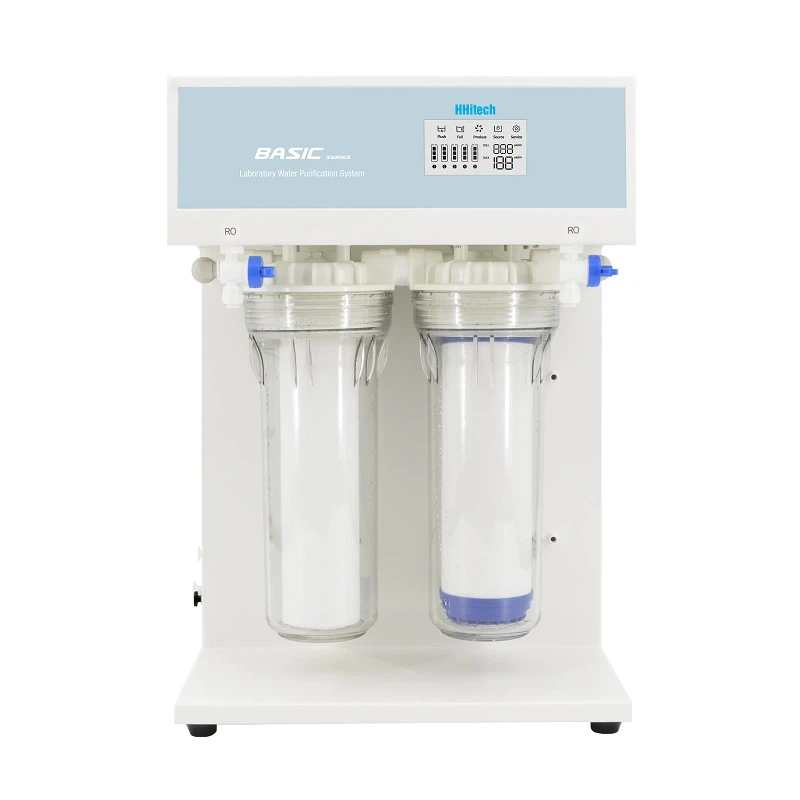
At our company, we offer a range of lab RO water systems to meet different needs. Our Basic - RO Series Reverse Osmosis Water System is a great option for smaller labs or those on a budget. It provides a reliable rejection rate for common contaminants, ensuring that you get clean water for basic lab applications.
For medium - sized labs with more demanding requirements, our Medium - RO Series Reverse Osmosis Water System is a top choice. This system is designed to handle a higher volume of water and offers an even better rejection rate, especially for more complex contaminants.
If you need an even more advanced system, our Medium - RRO Series Reverse Osmosis Water System is the way to go. It uses the latest membrane technology to achieve an outstanding rejection rate, making it suitable for high - end research and sensitive lab procedures.
To ensure that you're getting the most out of your RO water system, it's important to choose the right system for your specific needs. You should also follow a regular maintenance schedule. This includes pre - treatment of the incoming water to reduce the load on the RO membrane, regular membrane cleaning, and timely replacement of the membrane when needed.

When you're considering purchasing a lab RO water system, don't just focus on the initial cost. Think about the long - term performance and the cost of maintenance. A system with a high rejection rate might cost a bit more upfront, but it can save you money in the long run by reducing the need for additional purification steps and minimizing the risk of contaminated water affecting your lab results.
If you're still not sure which system is right for you, our team of experts is here to help. We can analyze your water source, understand your lab requirements, and recommend the best system for you. We'll also provide you with all the information you need about installation, operation, and maintenance.
So, if you're in the market for a lab RO water system, whether it's for a new lab setup or an upgrade to your existing system, don't hesitate to reach out. We're committed to providing you with high - quality products and excellent customer service. Let's work together to ensure that your lab has a reliable supply of pure water.
In conclusion, the rejection rate of a lab RO water system is a complex but important concept. By understanding the factors that affect it and choosing the right system, you can ensure that your lab has access to clean, high - quality water for all your research and experiments.
References:
- "Reverse Osmosis Technology: Principles and Applications" by John Doe
- "Water Purification for Laboratory Use" by Jane Smith


