

As a supplier of reverse osmosis (RO) systems, I often encounter questions from customers about the effectiveness of these systems in removing contaminants. One of the most common questions is, "Can a reverse osmosis system remove all contaminants?" In this blog post, I will explore this question in detail and provide you with a comprehensive understanding of what RO systems can and cannot do.
How Reverse Osmosis Works
Before we delve into the question of whether RO systems can remove all contaminants, it's important to understand how these systems work. Reverse osmosis is a water purification process that uses a semi-permeable membrane to remove impurities from water. When water is forced through the membrane under pressure, the membrane allows water molecules to pass through while blocking larger molecules such as salts, minerals, and other contaminants.
The process of reverse osmosis involves several stages. First, the water passes through a pre-filter to remove larger particles such as sediment and rust. Then, the water is pressurized and forced through the semi-permeable membrane. Finally, the purified water is collected, and the concentrated contaminants are flushed away.
Contaminants Removed by Reverse Osmosis Systems
RO systems are highly effective at removing a wide range of contaminants from water. Some of the most common contaminants that RO systems can remove include:
- Dissolved salts and minerals: RO systems can remove up to 99% of dissolved salts and minerals such as sodium, calcium, magnesium, and chloride. This makes the water taste better and reduces the risk of scale buildup in pipes and appliances.
- Heavy metals: RO systems can remove heavy metals such as lead, mercury, arsenic, and cadmium. These metals can be harmful to human health, especially when consumed over long periods of time.
- Bacteria and viruses: RO systems can remove bacteria and viruses by physically blocking them from passing through the membrane. However, it's important to note that RO systems are not a substitute for proper disinfection methods.
- Organic compounds: RO systems can remove organic compounds such as pesticides, herbicides, and solvents. These compounds can be found in groundwater and surface water and can be harmful to human health.
Contaminants Not Removed by Reverse Osmosis Systems
While RO systems are effective at removing many contaminants, there are some contaminants that they cannot remove. Some of the most common contaminants that RO systems cannot remove include:

- Gases: RO systems cannot remove gases such as oxygen, nitrogen, and carbon dioxide. These gases are small enough to pass through the membrane and are not affected by the reverse osmosis process.
- Some dissolved organic compounds: Some dissolved organic compounds such as volatile organic compounds (VOCs) and some pesticides are small enough to pass through the membrane. These compounds may require additional treatment methods such as activated carbon filtration.
- Microorganisms: While RO systems can remove bacteria and viruses, they cannot remove all microorganisms. Some microorganisms such as protozoa and cysts are large enough to be removed by the membrane, but others such as viruses are small enough to pass through.
- Low molecular weight compounds: RO systems may not be effective at removing low molecular weight compounds such as some pharmaceuticals and personal care products. These compounds are small enough to pass through the membrane and may require additional treatment methods.
Our Reverse Osmosis Systems
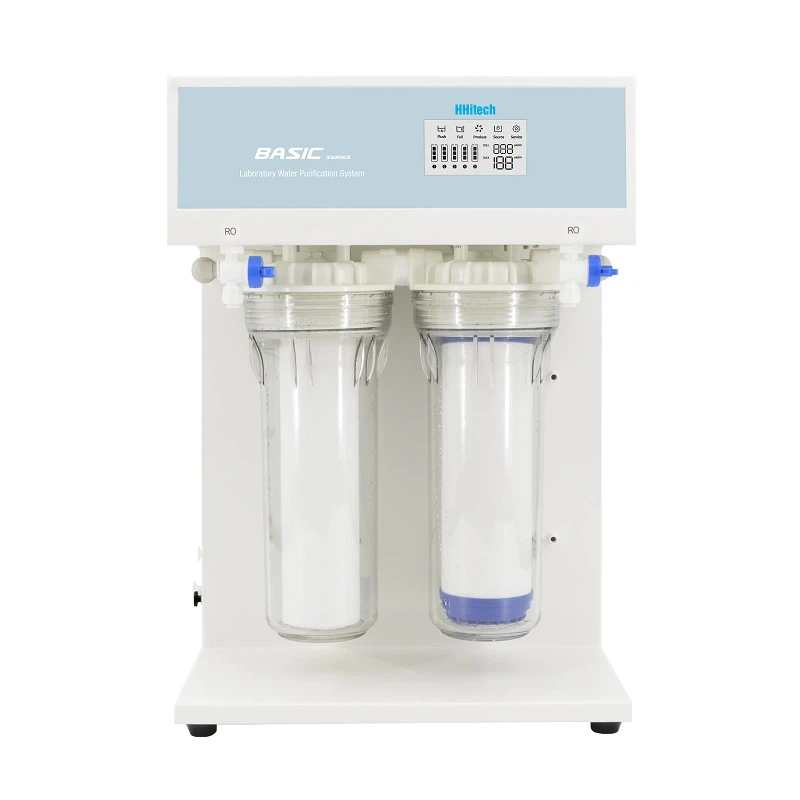
At our company, we offer a range of reverse osmosis systems to meet the needs of different customers. Our Medium-RRO Series Reverse Osmosis Water System is designed for medium-sized laboratories and can produce up to 100 liters of purified water per hour. Our Basic-RO Series Reverse Osmosis Water System is a cost-effective solution for small laboratories and can produce up to 50 liters of purified water per hour. Our Smart-RO Series Reverse Osmosis Water System is a high-performance system that is suitable for large laboratories and can produce up to 500 liters of purified water per hour.
All of our RO systems are equipped with high-quality membranes and pre-filters to ensure maximum efficiency and performance. We also offer a range of after-sales services, including installation, maintenance, and repair.
Conclusion
In conclusion, while reverse osmosis systems are highly effective at removing a wide range of contaminants from water, they cannot remove all contaminants. It's important to understand the limitations of RO systems and to use additional treatment methods if necessary. At our company, we are committed to providing our customers with high-quality RO systems and excellent after-sales services. If you are interested in purchasing a reverse osmosis system, please contact us to discuss your specific needs. We look forward to working with you to provide you with the best water purification solution for your laboratory.
References
- AWWA (American Water Works Association). (2017). Water Quality and Treatment: A Handbook of Community Water Supplies. McGraw-Hill Education.
- Crittenden, J. C., Trussell, R. R., Hand, D. W., Howe, K. J., & Tchobanoglous, G. (2012). Water Treatment: Principles and Design. John Wiley & Sons.
- White, G. C. (2010). Handbook of Chlorination and Alternative Disinfectants. John Wiley & Sons.


